
Pubic Pain During Pregnancy (Pubic Symphysis): What Should You Do?
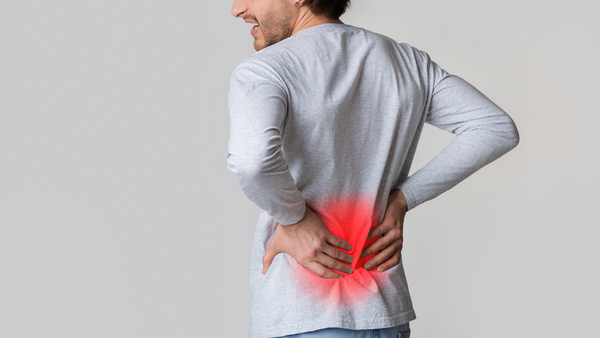
Are you pregnant and experiencing pain in the very lower part of your abdomen, right over your pubic bone, when you walk, climb stairs, or roll over in bed? It’s not “all in your head,” nor is it something you simply have to put up with until you give birth. Here’s what causes this pubic symphysis pain, what you can do to relieve it, what to avoid, and when you should seek medical attention right away.
The short answer: Pubic pain during pregnancy is a type of pelvic pain that affects about one in five pregnant women (European guidelines, 2008; RCOG). It stems from a joint—the pubic symphysis—which becomes more mobile and is subjected to greater stress during pregnancy. It is uncomfortable but poses no risk to the baby, and most women who experience it go on to have a normal vaginal delivery. The most helpful strategies include: keeping your knees together when moving (getting out of the car, turning over in bed), distributing your weight evenly between both legs, getting dressed while seated, limiting stair use and heavy lifting, staying active without overexerting yourself, and seeking treatment early (physical therapy, osteopathy, pelvic support belt). Acetaminophen is the preferred pain reliever; anti-inflammatory drugs are prohibited starting in the 6th month, even in gel form (ANSM). Seek medical attention immediately if the pain is sudden and severe, if you can no longer walk, or if you have a fever, burning during urination, contractions, or bleeding.
What is the pubic symphysis, and why does it hurt?
A joint at the front of the pelvis
The pelvis is a ring formed by three bones: the sacrum at the back and the two iliac bones on the sides. At the front, these two bones meet in the middle, at the pubis, via a small fibrous and cartilaginous joint: the pubic symphysis. At the back, they articulate with the sacrum via the two sacroiliac joints. These three joints work together and normally move only a few millimeters.
How Pregnancy Changes Things
- Hormones loosen the ligaments in the pelvis to prepare for the baby's passage. The space at the symphysis naturally widens by a few millimeters during pregnancy.
- The weight of the baby and the uterus, along with changes in posture, increase the strain on the pelvic ring.
- The muscles that stabilize the pelvis (deep abdominal muscles, glutes, pelvic floor) are stretched or fatigued.
When the pelvic joints move less smoothly, the ring becomes less stable and causes pain. The Royal College of Obstetricians and Gynecologists (RCOG) summarizes it this way: pain most often stems from pelvic joints that move unevenly, not from a pelvis that “opens up” or “dislocates.”
Confusing vocabulary
You may hear terms such as symphysitis, pregnancy-related pubalgia, “pubic symphysis dysfunction,” or pelvic girdle pain. European and British guidelines now group all of these conditions under the term “pregnancy-related pelvic girdle pain,” which can affect the front of the pelvis (pubis), the back (buttocks, sacroiliac joints), or both (Vleeming et al., 2008). Symphysis pubis diastasis, on the other hand, is a significant and rare separation of the joint, most commonly occurring during childbirth (see below).
Is this common? Who is most at risk?
European guidelines estimate thatapproximately 20% of pregnant women experience pelvic girdle pain at some point (Vleeming et al., 2008). A literature review estimates that about half of all lower back and pelvic pain during pregnancy is pelvic pain, and that the pain is severe in about one in four women who experience it (Wu et al., 2004).
The most commonly cited risk factors are:
- back or pelvic pain before pregnancy;
- pelvic pain during a previous pregnancy;
- a past pelvic injury (fall, accident);
- physically demanding work;
- joint hyperlaxity.
Conversely, the birth control pill, the interval between pregnancies, height, or smoking do not appear to play a role (Vleeming et al., 2008).
How can you tell if you have pubic symphysis pain?
Typical signs
- pain in the middle of the pubic area, roughly at hip level, sometimes as sharp as a knife stab;
- pain that may radiate to the groin, the inner thighs, the perineum, or the lower back;
- sometimes a cracking or popping sensation in the pelvis;
- a gait that wobbles or limps at the end of the day.
What Wakes Her Up
| Location | Why does it hurt? |
|---|---|
| Going up or down a flight of stairs | Body weight shifts to one leg with each step |
| Getting dressed while standing (pants, socks) | Weight-bearing on one leg and pubic symphysis shear |
| Turning over in bed | Both legs move out of sync |
| Get out of the car, spread your legs | The knees spread apart, and the pubic bone is stretched |
| Walking for long periods or on uneven ground | Alternating Footwork Drill |
| Sitting or standing for long periods of time | Fatigue of the stabilizing muscles |
| Sexual intercourse | Depending on the position, leg spread |
Pain most often occurs during the second or third trimester, but it can start earlier.
How the Diagnosis Is Made
The diagnosis is clinical: the midwife, doctor, physical therapist, or osteopath will ask you questions and examine you. European guidelines are based on simple tests: pain on palpation of the symphysis pubis, the modified Trendelenburg test (standing on one leg), and the active straight-leg raise test. No X-rays are necessary for pelvic girdle pain during pregnancy (Vleeming et al., 2008). The examination also serves to rule out other causes.
Signs That Indicate You Should Seek Medical Attention Immediately
Pain in the pubic area during pregnancy is most often mechanical in nature and harmless. Call your doctor, midwife, or the maternity ward immediately (dial 15 in case of an emergency) if:
- The pain comes on suddenly, is very intense, and prevents you from walking or standing, especially around the time of delivery;
- If you have a fever, chills, a burning sensation when urinating, or a very frequent urge to urinate: a urinary tract infection can cause pain in the lower abdomen, just above the pubic bone, and must be treated promptly during pregnancy;
- you experience regular contractions, a tightening of the abdomen, bleeding, or a loss of fluid;
- the pain is accompanied by difficulty urinating or having a bowel movement, or numbness in the perineum or a leg;
- You have a swollen, warm, and painful calf (risk of phlebitis, which is higher when you don't move much);
- The pain occurs after a fall or a blow.
These conditions are not within the scope of osteopathy: they should be evaluated by a doctor or a midwife.
Everyday Habits to Follow
The golden rule, as adopted by the RCOG and the NHS: avoid movements in which the two legs work out of sync or spread apart, and stay active within the limits of what is pain-free.
Exercises to Adapt
- Keep your knees together when turning over in bed: bend your knees, press them together, and turn as a single unit.
- To get out of the car: first sit down, then swing both legs out together, keeping your knees together (a plastic bag on the seat can help with this). Do the opposite to get back in.
- Get dressed while sitting down: pants, tights, socks, and shoes.
- On the stairs: take one step at a time, using your less painful leg first when going up, and your more painful leg first when going down. Limit the number of trips up and down.
- Standing: Distribute your weight evenly between both legs, without shifting your weight to one side.
- Sitting: Change your position at least every 30 minutes; avoid crossing your legs and sitting on the floor in the lotus position.
- Everyday challenges: stepping over the bathtub, climbing onto a stool, getting out of a pool using the ladder… ask for help or make adjustments (take a shower instead of a bath).
Sleeping Positions
- On the side that hurts the least, place a pillow between your knees and ankles (a nursing pillow is ideal) and a small pillow under your belly.
- Satin sheets or slippery pajamas make it easier to roll over.
- To get up: roll onto your side with your knees together, let both legs drop down together, and push yourself up with your arms.
Expenses and Daily Life
- Avoid carrying heavy loads: have your groceries delivered or distribute them between both hands; use a shopping cart instead of a basket.
- Avoid carrying an older child on your hip: sit down and have them climb onto your lap.
- Break activities into smaller segments: it’s better to take three short walks than one long one. If the pain increases after an activity, it means the activity was too long.
- Water often provides relief: Avoid the breaststroke (since your legs spread apart); instead, opt for gentle prenatal water aerobics or walking in the water.
Four Gentle Exercises
Do this slowly, breathing deeply, without triggering pain. Stop if the pain increases or if you feel contractions. Consult your midwife, doctor, or physical therapist first.
- Breathing using the pelvic floor and deep abdominal muscles: Lying on your side or sitting, inhale gently, then as you exhale, gently squeeze your pelvic floor (as if holding in gas) and gently pull in your lower abdomen. Release as you inhale. Repeat 10 times.
- Squeezing a cushion: Sit with your knees bent and a cushion between your knees. Gently squeeze for 5 seconds, then release. Repeat 10 times. If this triggers pain in your pubic area, stop this exercise.
- Round your back, then flatten it while on all fours: knees hip-width apart (no wider), hands under your shoulders. As you exhale, round your back; as you inhale, return to a flat back. Repeat 10 times.
- Standing hip tilt against a wall: Back and buttocks against the wall, feet parallel, knees slightly bent. As you exhale, gently press your lower back against the wall, then release. Repeat 10 times.
The Health Insurance Agency advises against exercising while lying on your back starting in the 24th week of amenorrhea. For more tips, see our article on pregnancy and exercise.
Pelvic belt, crutches, heat
- A pelvic belt (a strap worn low on the upper thighs and under the abdomen) can provide relief by tightening the pelvic ring. It should be worn during activities that trigger pain, not all day long. Ask your midwife or physical therapist for advice on which model to choose and how to adjust it.
- If there is significant pain, using crutches for a short period of time reduces pressure on the pelvis (RCOG).
- Applying heat (a warm, not hot, hot water bottle) or, sometimes, cold to the pubic area for 15 minutes can relieve the pain.
Medications: Official Guidelines
Do not self-medicate during pregnancy: always ask your doctor, midwife, or pharmacist for advice.
- Paracetamol is the preferred pain reliever during pregnancy (ANSM), at the lowest possible dose and for the shortest possible time.
- Nonsteroidal anti-inflammatory drugs (NSAIDs) such as ibuprofen, ketoprofen, diclofenac, or aspirin at doses exceeding 100 mg per day are contraindicated starting at the beginning of the 6th month (24 weeks of amenorrhea), even as a single dose and even when applied as a gel or patch to the skin. Before the 6th month, they should only be used with a prescription (ANSM).
- Be wary of creams and patches marketed for pain relief: some contain anti-inflammatory drugs or essential oils that are not recommended during pregnancy.
What kind of care?
As soon as possible
The RCOG emphasizes one point: pelvic girdle pain is not something you should simply “put up with” until delivery. The earlier it is treated, the more likely it is that the condition will not worsen. Talk to your midwife or doctor as soon as you notice the first signs.
Professionals Who Can Help You
- The midwife and doctor make the diagnosis, rule out other causes, prescribe acetaminophen, a support belt, or physical therapy as needed, and may consider adjusting the workstation or granting a leave of absence if the pain is debilitating.
- The physical therapist offers personalized pelvic stabilization exercises and movement guidance, and may provide a support belt or crutches. European guidelines recommend personalized exercises during pregnancy (Vleeming et al., 2008).
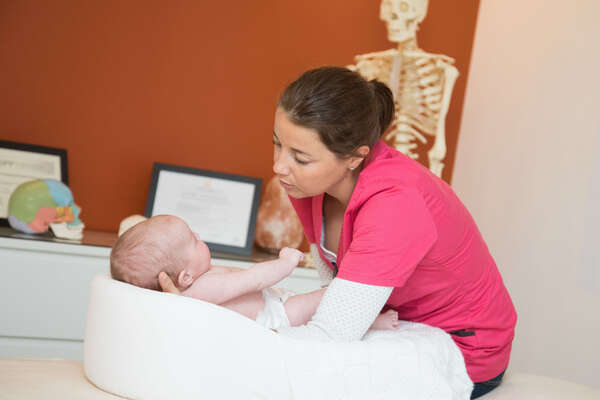
- The osteopath provides complementary care using gentle manual techniques.
Osteopathy: What the Studies Say
- The RCOG lists gentle manual therapy of the muscles and joints—performed by a physical therapist, osteopath, or chiropractor trained in pregnancy-related pelvic pain—among the treatment options, noting that it should not be painful.
- A meta-analysis (Franke et al., 2017) found, with moderate evidence, that osteopathic treatment reduced pain and improved functional capacity in pregnant women with low back pain. The included trials focused on the lower back; this finding cannot be directly applied to pubic pain.
- The Cochrane Review (Liddle and Pennick, 2015) concludes that the evidence for pelvic pain is still limited: isolated studies suggest that acupuncture may be beneficial, and osteopathic manual therapy or a treatment approach combining manual therapy, exercise, and education may also help. The reported adverse effects were minor and temporary.
To put it simply: Osteopathy can be part of a comprehensive care plan, along with exercise and advice, but it does not promise to “put the pelvis back in place” and is not a substitute for prenatal care.
What Happens During a Session?
- A consultation: where and when you experience pain, what triggers the pain, your due date, the progress of your pregnancy, your labor, and how to recognize signs that require medical attention.
- An examination of your pelvis, back, hips, and gait, along with pain provocation tests.
- Gentle manual techniques appropriate for the stage of pregnancy: lying on your side or sitting, never on your stomach, without forceful manipulation and without spreading your legs in a way that causes pain.
- Personalized advice: daily routines, postures, exercises, and organization.
Allow about 45 minutes. If the pain doesn't improve after one or two sessions, discuss it with your midwife or doctor to see if physical therapy or other options might be recommended.
What an osteopath Does Not Do
Decree No. 2007-435 of March 25, 2007, prohibits osteopaths who are not medical doctors from performing gynecological and obstetric manipulations and pelvic examinations, and requires them to refer patients to a physician when symptoms require a medical diagnosis or treatment. Osteopathy is not a substitute for prenatal care, childbirth preparation, or medical treatment.
What about childbirth?
- Most women with pubic pain give birth vaginally. A cesarean section is not indicated for pelvic girdle pain and may even slow recovery (RCOG). Induction of labor is generally not necessary either.
- Mention your pain in your birth plan and to the medical team on the day of delivery. Here’s a tip that’s often suggested: Before giving birth, measure how far you can spread your knees without feeling pain, so that the medical team respects that limit—especially if you’re receiving an epidural.
- Lying on your side, on all fours, or in the water often provides relief; all forms of pain relief, including an epidural, remain an option.
Symphysis Separation: Rare but Worth Knowing About
During childbirth, the joint may, in rare cases, separate by more than one centimeter: this is called pubic symphysis diastasis. It remains rare (according to studies, occurring in 1 out of 300 to 1 out of 30,000 births). It presents as severe pain in the pubic area immediately after birth, an inability to walk or lift the leg, and sometimes urinary problems. It is diagnosed through imaging and is most often treated without surgery (rest, pain relievers, a support belt, and physical therapy). If you experience these symptoms in the maternity ward or after returning home, report them immediately.
After the Birth
Pubic pain generally improves in the weeks following childbirth, but about one in ten women continue to experience pain (RCOG). In this case, continue taking the recommended pain relievers and doing the exercises, and discuss this during your postpartum visit. Perineal and abdominal rehabilitation may be prescribed; it also helps reduce the risk of recurrence during a future pregnancy. See our article on why to see an osteopath after giving birth.
If you experienced pubic pain during a previous pregnancy, your risk is higher in subsequent pregnancies: resuming regular physical activity and strengthening your abdominal muscles and pelvic floor before a new pregnancy, and then seeking medical advice at the first signs of pain, generally helps you manage the pain more effectively.
Other Pains Associated with Pregnancy
Pain in the pubic area is often accompanied by other types of pain.
- For lower back and pelvic pain, read our article on back pain during pregnancy;
- For pain that radiates down the leg, see our article on sciatica during pregnancy.
- A pregnancy ball can also help relieve pressure on the pelvis while sitting: see everything you need to know about the Swiss ball (sit with your knees hip-width apart).
See a doctor in Versailles and the Yvelines department
Our offices in Versailles Chantiers (just a stone’s throw from the train station) and Versailles Grand Siècle welcome pregnant women at any stage of pregnancy from Versailles and neighboring towns (Le Chesnay-Rocquencourt, Viroflay, Buc, Saint-Cyr-l’École, Vélizy-Villacoublay). Please mention your stage of pregnancy and any pubic pain when scheduling your appointment. To learn more, visit our page on osteopathy for pregnant women in Versailles, read our article on the benefits of osteopathy for pregnant women, or schedule an appointment.
Do I need a doctor's order or prescription to see a doctor?
No, not at all. An osteopath is a primary care provider: you can make an appointment directly, without going through your primary care physician.
How long does an osteopathy session last?
The first session lasts about 45 minutes (detailed medical history + examination + treatment).
Do I need to undress for the appointment?
Yes, generally speaking, it’s best to wear underwear (or shorts/leggings and a sports bra for women) so that the osteopath can observe your posture, test your range of motion, and work effectively.
Will the osteopath "crack" my joints?
Not necessarily! The well-known joint manipulations (HVLA techniques or “cracking”) are used only when indicated and with your consent. Many osteopaths prefer gentle techniques (tissue, fascial, visceral, cranial) that do not involve cracking and are just as effective. We are skilled in all techniques and adapt to your needs and preferences.
Does osteopathy cause pain during or after the session?
The techniques used are generally gentle and painless. You may experience some mild sensitivity during the treatment (especially in areas that are already irritated), but it should never be painful. After the session, some people experience temporary fatigue, mild soreness, or a feeling of “deep relaxation” for 24–48 hours.
Is osteopathy covered by Social Security or private health insurance?
No, osteopathy is not covered by Medicare. However, the vast majority of private health insurance plans reimburse all or part of the cost of sessions (often 3 to 6 sessions per year, ranging from €30 to €100 per session, depending on the policy). Check your coverage summary or contact your insurance provider.
Can you see an osteopath for preventive care, even if you aren't in pain?
Yes, and it’s actually highly recommended! A regular osteopathic assessment (once or twice a year) helps detect and correct restrictions before they become painful. It’s ideal for athletes, people with sedentary lifestyles, pregnant women, seniors, and those who spend a lot of time sitting or standing at work.
Is osteopathy suitable for babies, children, pregnant women, and seniors?
Absolutely! The techniques are tailored to each age group and individual’s physical condition: very gentle for infants (no “cracking”), specifically designed for pregnancy (relief from sciatica, heartburn, and helping with baby positioning), and performed with caution for seniors (taking into account contraindications such as severe osteoporosis).
What is the difference between an osteopath, a physical therapist, and a chiropractor?
- Osteopath: a holistic manual approach that treats the entire body (muscles, joints, internal organs, and skull). No equipment or exercises.
- Physical therapist: often prescribed by a doctor, uses massage, exercises, post-operative rehabilitation, and equipment.
- Chiropractor: focuses primarily on the spine and nervous system, using frequent, quick adjustments. All three approaches can be complementary.
How often should athletes see an osteopath?
For preventive care, one or two visits per year are often sufficient. If you’re experiencing pain or have a sports-related goal, more frequent follow-ups may be helpful.
Frequently Asked Questions
Is pubic pain during pregnancy dangerous for the baby?
No. It can be very uncomfortable for the mother, but it doesn't harm the baby. However, seek medical attention immediately if you experience sudden pain that prevents you from walking, a fever, a burning sensation when urinating, contractions, bleeding, or fluid leakage.
When does pubic symphysis pain occur?
It most often occurs during the second or third trimester, when the belly gets heavier, but it can start earlier, especially if you’ve had pelvic pain during a previous pregnancy.
How can I relieve pubic pain during pregnancy?
Keep your knees together when turning over in bed and getting out of the car; get dressed while seated; distribute your weight evenly between both legs; limit stair climbing and heavy lifting; stay active without overexerting yourself; and wear a pelvic support belt during activities. Paracetamol may be taken with a doctor’s approval; anti-inflammatory medications are prohibited starting in the 6th month, even in gel form.
Is it possible to have a vaginal delivery if you have symphysis pain?
Yes, the vast majority of women in this situation give birth vaginally without complications. A cesarean section is not indicated for this reason. Let the medical team know about your pain and tell them how far you can spread your knees without feeling pain.
Does pubic pain go away after childbirth?
In the vast majority of cases, it improves within a few weeks after childbirth. About one in ten women continues to experience pain; in such cases, treatment should continue, and this should be discussed during the postpartum visit.
Can an osteopath relieve pain in the pubic symphysis?
British guidelines list gentle manual therapy—particularly by an osteopath trained in pregnancy care—as one of the options, in addition to exercises and advice. Research on pelvic pain remains limited. Sessions are provided without a prescription, using gentle techniques appropriate for the stage of pregnancy.
Marie Messager
Osteopath D.O
2 rue Alexis de Tocqueville
78000 Versailles